puppy behavior

Why Puppies Chew Everything—and How to Redirect Them Safely
Chewing helps puppies explore, play, and cope with teething discomfort. The goal is not to stop the behavior entirely, but to steer it toward safer objects before shoes, cords, or swallowed pieces become a problem. A puppy chewing a shoe, table leg, or stray piece of packaging is not necessarily being disobedient. Puppies investigate much of their environment with their mouths, and chewing can al.. ดูเพิ่ม

Dog socialization means learning to handle the wider world
Meeting other dogs is only one small part of socialization. The broader goal is to help a dog feel safe and behave comfortably around the people, places, sounds, surfaces, and routines it will encounter throughout life. A well-socialized dog is not necessarily the dog that runs up to every person or plays happily with every canine it meets. It is the dog that can encounter ordinary life without b.. ดูเพิ่ม

Why dogs chase their tails—and when it may signal a problem
A quick spin may be harmless play, especially in a puppy. Frequent, hard-to-interrupt tail chasing can instead point to itching, pain, stress, or a compulsive disorder. A dog spinning after its own tail can look like pure comedy. In many cases, it is simply a brief burst of play, curiosity, excitement, or an attempt to get attention. The same action, however, can have a very different meaning whe.. ดูเพิ่ม
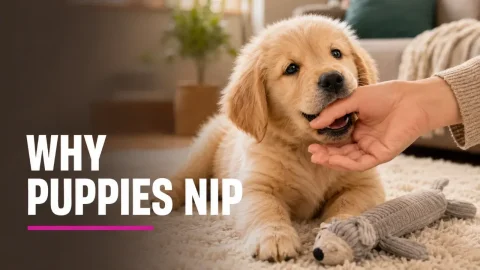
Why Puppies Bite Your Hands During Play—and How to Respond
Those needle-sharp nips are usually part of normal puppy play, not an attempt to dominate you. The way you respond can teach your puppy that toys—not human skin—keep the game going. A puppy lunges for your fingers, catches your sleeve, and returns for another bite as if your hand were the world’s most exciting toy. It can hurt, but in most young puppies, play biting is normal so.. ดูเพิ่ม