dog anxiety

What “whale eye” means when your dog shows the whites of its eyes
“Whale eye” describes the crescent of white that becomes visible when a dog turns its head or gaze while keeping track of something nearby. It often appears when a dog is uncomfortable, anxious, defensive, or trying to create space—but context matters. Your dog turns its head away but keeps watching you from the corner of its eye. Suddenly, a bright crescent of white appears aro.. ดูเพิ่ม

Why Dogs Press Against Your Legs—and What Their Body Language Says
A dog leaning against your legs may be seeking affection, security, warmth, or attention. The surrounding situation and the rest of the dog’s body provide the clearest clues. When a dog presses its side, shoulder, or entire body against your legs, the simplest explanation is often that it wants to be close to you. But leaning is not a single-purpose signal: the same behavior can appear duri.. ดูเพิ่ม

Crate training can ease stress—but only when dogs feel safe
A crate can offer a dog a quiet, predictable place to rest during busy or unfamiliar situations. The benefit depends on patient, reward-based training—and some anxious dogs need a different solution. A crate does not automatically calm a dog. When introduced gradually and associated with food, rest, and safety, however, it can become a familiar retreat that helps some dogs cope with noise, .. ดูเพิ่ม

Why Some Dogs Love Car Rides While Others Dread Them
A car may predict a trip to the park for one dog and nausea or a stressful vet visit for another. The difference often comes down to physical comfort and the associations each dog has learned. A dog racing toward an open car door is not necessarily fascinated by the vehicle itself. More often, the car has become a reliable signal that something rewarding is about to happen: time with a favorite p.. ดูเพิ่ม
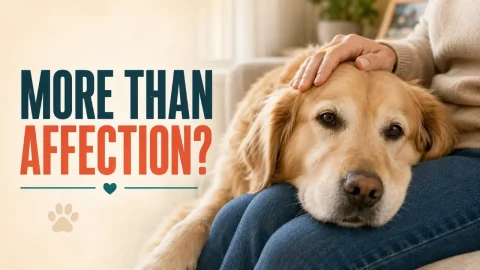
Why Dogs Put Their Head on Your Lap—and What They May Be Asking For
A dog’s heavy head on your lap may express affection, request attention, or seek reassurance. The rest of the body helps reveal what the gesture means in that moment. Your dog walks over, looks up at you, and gently places their head on your lap. It feels unmistakably affectionate—and often it is. But dogs do not use this gesture as a single sentence with one fixed translation. Depend.. ดูเพิ่ม

Why Dogs Dig at Blankets Before Sleeping
Scratching, circling, and bunching up blankets can be part of a dog’s natural settling routine. The surrounding body language reveals whether it means comfort or something deserves a closer look. Your dog climbs into bed, paws furiously at a perfectly smooth blanket, turns around twice, and finally collapses into the spot they just “renovated.” It may look pointless, but this fa.. ดูเพิ่ม

Why Dogs Need a New Routine After Moving to a New Home
A new home changes the sounds, smells, walking routes, and daily signals your dog once understood. A predictable but flexible routine can make the unfamiliar feel safe again. Moving may mean a better neighborhood, a larger home, or a fresh start for the people involved. For a dog, it can mean losing nearly every familiar clue that once made the day predictable. The furniture may be the same, but .. ดูเพิ่ม